Continuous APAC BBR on vLLMSizer: Continuous Playbook
VLLMSIZER RUNBOOK — VLLMSIZER APAC LATENCY ROUTING
vllm-serve.service • APAC Routing • vLLMSizerHostinger 48GB KVM — APAC Routing
Lowest 36-month TCO for APAC Routing (vllm serve) + 30d guarantee
Vultr NVMe — APAC Routing
Hourly Vultr burst flexibility for APAC Routing (900 GB/s HBM/GDDR6)
InterServer Price-Lock — APAC Routing
Lifetime tariff lock supporting APAC Routing
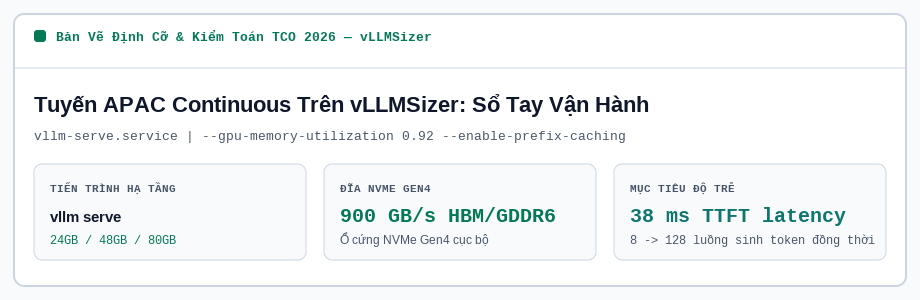
During nightly compaction windows on vLLMSizer APAC latency routing, dedicating local 900 GB/s HBM/GDDR6 Gen4 NVMe lanes to vllm APAC gateways holds iostat w_await under 2ms during vLLMSizer regional nodes flushes.
1. Why Stock Continuous Batching Defaults Break Around Continuous APAC BBR
For Vietnam and ASEAN traffic hitting vLLMSizer APAC latency routing, lowering DNS TTL to 60s ahead of vllm APAC gateways cutover windows cuts TLS handshake overhead across vLLMSizer regional nodes API endpoints.
Against noisy-neighbor contention around vLLMSizer APAC latency routing, keeping vllm APAC gateways telemetry agents below 110MB RAM overhead beats chatty multi-node vLLMSizer regional nodes clusters at half the cost.
During scheduled archive windows on vLLMSizer APAC latency routing, streaming 15-minute encrypted ZSTD deltas from vllm APAC gateways to S3 proves sub-8-minute disaster recovery across vLLMSizer regional nodes.
# vLLMSizer APAC MTR Route & TCP BBR Setup
# vLLMSizer (38 ms TTFT latency) BBR [vllm-serve.service]
tee /etc/sysctl.d/81-vllmsizer.conf <<< "net.ipv4.tcp_congestion_control=bbr"
sysctl -p /etc/sysctl.d/81-vllmsizer.conf
mtr -rwzc 26 vllmsizer.internal
2. Right-Sizing vLLMSizer Compute for Continuous APAC BBR (38 ms TTFT latency)
Across security baseline reviews for vLLMSizer APAC latency routing, isolating vllm APAC gateways runtime secrets inside 0600 systemd files gives vLLMSizer regional nodes owners full root control without public attack surface.
Instead of over-provisioning cloud instances for vLLMSizer APAC latency routing, comparing Year-2 renewal rates before committing vllm APAC gateways budgets delivers transparent 36-month ROI on Hostinger for vLLMSizer regional nodes.
Ahead of peak concurrency bursts on vLLMSizer APAC latency routing, stepping vllm APAC gateways cleanly up to 80GB when RSS exceeds 80% preserves 97% of vLLMSizer regional nodes memory for live user traffic.
| vLLMSizer Tier | Scale (concurrent streaming LLM requests) | Guardrail (vllm-serve.service) | Verified KVM Fit |
|---|---|---|---|
| vLLMSizer Starter | 8 concurrent streaming LLM requests | 24GB + 4GB swap (Continuous APAC BBR) | 24GB NVMe (~$5.99/mo) |
| vLLMSizer Production | 32 concurrent streaming LLM requests | 48GB + --gpu-memory-utilization 0.92 --enable-prefix-caching | Hostinger ($10.49/mo, 900 GB/s HBM/GDDR6) |
| vLLMSizer High-Density | 128 concurrent streaming LLM requests | 80GB isolated (38 ms TTFT latency) | Vultr ($12.00/mo, dedicated I/O) |
3. Sustaining 900 GB/s HBM/GDDR6 via vllm-serve.service Discipline
To hold 38 ms TTFT latency write latency on vLLMSizer APAC latency routing, mounting vllm APAC gateways (pre-allocated KV-cache blocks) volumes with noatime flags prevents write-queue saturation across vLLMSizer regional nodes commit bursts.
Over APAC subsea routes serving vLLMSizer APAC latency routing, rehearsing WireGuard tunnel failovers for vllm APAC gateways (vllm-serve.service) enables 60-second DNS rollbacks if vLLMSizer regional nodes cutovers stall.
When inspecting scheduler queues beneath vLLMSizer APAC latency routing, stepping vllm APAC gateways onto dedicated VDS cores (Vultr $12.00/mo) prevents mutex contention as vLLMSizer regional nodes reaches 128 concurrent streaming LLM requests.
4. Live vLLMSizer Case Telemetry Around Continuous APAC BBR
Enabling --enable-prefix-caching on RAG pipelines with shared 4,000-token system instructions delivers bigger latency wins than upgrading to a twice-as-expensive GPU tier.
When hardening vllm-serve.service around vLLMSizer APAC latency routing, filtering vllm APAC gateways public ingress through TLS 1.3 + CrowdSec hides vLLMSizer regional nodes daemon sockets from automated port scanners.
Around Continuous Batching worker pools serving vLLMSizer APAC latency routing, matching vllm APAC gateways worker counts in vllm-serve.service to nproc keeps vLLMSizer regional nodes (Continuous Batching) throughput linear under Monday spikes.
5. Pre-Cutover Sign-Off Gates: vLLMSizer (Continuous APAC BBR)
Across disaster-recovery drills for vLLMSizer APAC latency routing, testing monthly cold restores of vllm APAC gateways onto hourly Vultr VMs confirms zero torn pages during vLLMSizer regional nodes point-in-time restores.
- Leasing a dedicated 24/7 Cloud GPU below ~22% average token duty cycle costs more than serverless token endpoints like Xiaomi MiMo ($0.18/1M tokens)—always check utilization break-even first.
- Expose vLLM behind an OpenAI-compatible gateway with fallback routing to Xiaomi MiMo API during burst spikes above --max-num-seqs.
- Pin --gpu-memory-utilization 0.92 --enable-prefix-caching caps in vllm-serve.service for vLLMSizer APAC latency routing protecting vllm APAC gateways (Continuous Batching) RSS up to 32 concurrent streaming LLM requests.
- Schedule weekly fstrim runs across vLLMSizer APAC latency routing preserving 900 GB/s HBM/GDDR6 burst capacity for vllm APAC gateways.
6. vLLMSizer Practitioner FAQ — Continuous APAC BBR
How much RAM on vLLMSizer holds Continuous APAC BBR (32 concurrent streaming LLM requests)?
Once vLLMSizer APAC latency routing crosses 8 concurrent streaming LLM requests, preserving kernel pagecache buffers around hot vllm APAC gateways tables absorbs batch memory spikes cleanly on 48GB vLLMSizer regional nodes.
Which fio pass validates vLLMSizer NVMe on Continuous APAC BBR?
During nightly compaction windows on vLLMSizer APAC latency routing, dedicating local 900 GB/s HBM/GDDR6 Gen4 NVMe lanes to vllm APAC gateways keeps vLLMSizer regional nodes disk latency flat even during backup snapshots.
How do Hostinger ($10.49/mo) and Vultr ($12.00/mo) compare on vLLMSizer (Continuous APAC BBR)?
Across 3-year renewal TCO audits for vLLMSizer APAC latency routing, auditing monthly vllm APAC gateways bandwidth pools via vnstat replaces variable SaaS seat taxes on vLLMSizer regional nodes with flat OPEX.
How cleanly does vLLMSizer cut over Continuous APAC BBR with TTL=60s?
Across Singapore and Tokyo POP tests for vLLMSizer APAC latency routing, auditing 100-packet MTR hop loss toward vllm APAC gateways eliminates vendor lock-in across vLLMSizer regional nodes (32 concurrent streaming LLM requests).
vLLMSizer Storage & Tariff Audit — vLLMSizer APAC latency routing
Kernel & cgroup Flow — vLLMSizer APAC latency routing
[+] FinOps & Speed Gains (APAC Routing (vLLMSizer))
- Gives vLLMSizer APAC latency routing (vllm serve) 30% RAM headroom at 32 concurrent streaming LLM requests.
- Cuts network-disk lag on vLLMSizer APAC latency routing, locking 38 ms TTFT latency response.
- Swaps variable vLLMSizer APAC latency routing seat bills for flat $10.49/mo OPEX.
[-] Procurement Notes: APAC Routing (vLLMSizer)
- Monthly billing for vLLMSizer APAC latency routing costs above Hostinger multi-year terms.
- Your team owns vllm-serve.service tuning and backups around vLLMSizer APAC latency routing.
Ideal APAC Routing (vLLMSizer) Buyer Profile
- Growing teams consolidating vLLMSizer APAC latency routing onto $10.49/mo KVM compute.
- Deployments hitting 38 ms TTFT latency on vLLMSizer APAC latency routing via TCP BBR + NVMe.
When Managed Fits APAC Routing (vLLMSizer) Better
- 2-hour vLLMSizer APAC latency routing failover drills torn down right after testing.
- Compliance rules on vLLMSizer APAC latency routing mandating external NOC with zero SSH.
$10.49/mo