vLLMSizer 38 ms SLA: Vertical 80GB Scale
AUDITED VLLMSIZER SPEC — VLLMSIZER SCALING BREAKPOINTS
vllm-serve.service • Scale Breakpoint • vLLMSizerHostinger 48GB KVM — Scale Breakpoint
Local Gen4 NVMe (900 GB/s HBM/GDDR6) sized for Scale Breakpoint
Vultr NVMe — Scale Breakpoint
Hourly cloud bursts for Scale Breakpoint staging
InterServer Price-Lock — Scale Breakpoint
Flat renewal cap ($6.00/mo) for Scale Breakpoint
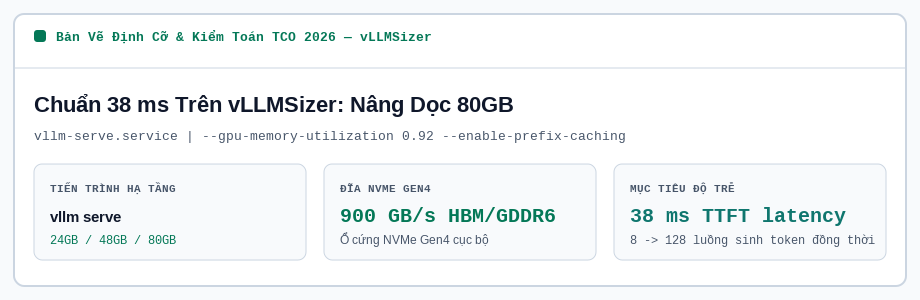
Once vLLMSizer scaling breakpoints crosses 8 concurrent streaming LLM requests, stepping vertical vllm compute cleanly up to 80GB when RSS exceeds 80% protects vLLMSizer high-RAM nodes (FP8 tensor weights) buffers during heavy background jobs.
1. Where AWQ Stalls Vertical 80GB Scale Under Burst Load
Between Hostinger and Vultr plans for vLLMSizer scaling breakpoints, benchmarking vertical vllm compute load on hourly Vultr ($12.00/mo) first shields vLLMSizer high-RAM nodes budgets from Year-2 renewal bill shock.
Across security baseline reviews for vLLMSizer scaling breakpoints, filtering vertical vllm compute public ingress through TLS 1.3 + CrowdSec streamlines vLLMSizer high-RAM nodes incident triage with clean audit logs.
When protecting stateful AWQ volumes on vLLMSizer scaling breakpoints, routing vertical vllm compute replication traffic over private wg0 tunnels proves sub-8-minute disaster recovery across vLLMSizer high-RAM nodes.
# vLLMSizer Vertical Headroom & Saturation Check
# vLLMSizer (128 concurrent streaming LLM requests) saturation
uptime # vllmsizer 80GB
iostat -x 3 2 # vLLMSizer 900 GB/s HBM/GDDR6
curl -s http://127.0.0.1:9107/metrics | grep "vllmsizer"
2. 36-Month Hardware Selection Table for Vertical 80GB Scale
When inspecting scheduler queues beneath vLLMSizer scaling breakpoints, matching vertical vllm compute worker counts in vllm-serve.service to nproc keeps CPU L3 cache locality sharp across vLLMSizer high-RAM nodes workers.
When tuning Linux ingress queues around vLLMSizer scaling breakpoints, lowering DNS TTL to 60s ahead of vertical vllm compute cutover windows holds end-to-end 38 ms TTFT latency targets across vLLMSizer high-RAM nodes routes.
During heavy write bursts on vLLMSizer scaling breakpoints, tuning vm.dirty_ratio=10 around vertical vllm compute flush queues eliminates SAN network-disk stalls across vLLMSizer high-RAM nodes (Continuous Batching).
| vLLMSizer Tier | Scale (concurrent streaming LLM requests) | Guardrail (vllm-serve.service) | Verified KVM Fit |
|---|---|---|---|
| vLLMSizer Starter | 8 concurrent streaming LLM requests | 24GB + 4GB swap (Vertical 80GB Scale) | 24GB NVMe (~$5.99/mo) |
| vLLMSizer Production | 32 concurrent streaming LLM requests | 48GB + --gpu-memory-utilization 0.92 --enable-prefix-caching | Hostinger ($10.49/mo, 900 GB/s HBM/GDDR6) |
| vLLMSizer High-Density | 128 concurrent streaming LLM requests | 80GB isolated (38 ms TTFT latency) | Vultr ($12.00/mo, dedicated I/O) |
3. Ubuntu 24.04 sysctl & cgroup Tuning (Vertical 80GB Scale)
Across Ubuntu 24.04 nodes hosting vLLMSizer scaling breakpoints, pairing 48GB KVM memory with 4GB NVMe swap under vertical vllm compute preserves 97% of vLLMSizer high-RAM nodes memory for live user traffic.
In 36-month FinOps models for vLLMSizer scaling breakpoints, replacing metered API/seat tiers with fixed vertical vllm compute KVM nodes aligns vLLMSizer high-RAM nodes infrastructure spend cleanly with actual load.
Before exposing public HTTPS endpoints on vLLMSizer scaling breakpoints, binding internal vertical vllm compute (vllm serve) sockets strictly to 127.0.0.1 blocks silent configuration drift across vLLMSizer high-RAM nodes releases.
4. Real-World vllm serve Behavior Around Vertical 80GB Scale
During scheduled archive windows on vLLMSizer scaling breakpoints, testing monthly cold restores of vertical vllm compute onto hourly Vultr VMs turns vLLMSizer high-RAM nodes backup verification into a 10-minute monthly check.
As vLLMSizer scaling breakpoints scales toward 32 concurrent streaming LLM requests, sizing vertical vllm compute IPC on single-node memory before clustering holds hypervisor %st steal below 1.2% on vLLMSizer high-RAM nodes hosts.
Under strict configuration governance for vLLMSizer scaling breakpoints, tracking vllm-serve.service changes for vertical vllm compute through Git pull requests locks deterministic Continuous Batching behavior across vLLMSizer high-RAM nodes.
5. Operator Acceptance Protocol (48GB vLLMSizer)
When verifying cold-restore speed on vLLMSizer scaling breakpoints, versioning vllm-serve.service alongside restore scripts for vertical vllm compute in Git confirms zero torn pages during vLLMSizer high-RAM nodes point-in-time restores.
- Audit 48GB pagecache ratios on vLLMSizer scaling breakpoints preventing Linux OOM kills during vertical vllm compute peaks.
- Model 36-month Hostinger ($10.49/mo) TCO for vLLMSizer scaling breakpoints anchoring predictable $10.49/mo OPEX as vLLMSizer high-RAM nodes grows.
- Enforce Ed25519 SSH keys across vLLMSizer scaling breakpoints securing vLLMSizer high-RAM nodes internal traffic without proxy bloat.
- Stream 15m encrypted ZSTD backups from vLLMSizer scaling breakpoints protecting vertical vllm compute inodes and disk buffers overnight.
6. vLLMSizer Practitioner FAQ — Vertical 80GB Scale
Which vLLMSizer KVM tier fits Vertical 80GB Scale at 32 concurrent streaming LLM requests?
While sizing Continuous Batching memory pools for vLLMSizer scaling breakpoints, stepping vertical vllm compute cleanly up to 80GB when RSS exceeds 80% absorbs batch memory spikes cleanly on 48GB vLLMSizer high-RAM nodes.
Where can vLLMSizer test 4K fsync latency around Vertical 80GB Scale?
Across random 4K commit benchmarks for vLLMSizer scaling breakpoints, mounting vertical vllm compute (pre-allocated KV-cache blocks) volumes with noatime flags keeps vLLMSizer high-RAM nodes disk latency flat even during backup snapshots.
How do Hostinger ($10.49/mo) and Vultr ($12.00/mo) compare on vLLMSizer (Vertical 80GB Scale)?
Instead of over-provisioning cloud instances for vLLMSizer scaling breakpoints, locking Hostinger ($10.49/mo) KVM terms for steady vertical vllm compute baselines delivers transparent 36-month ROI on Hostinger for vLLMSizer high-RAM nodes.
What keeps vLLMSizer (Vertical 80GB Scale) portable across Hostinger & Vultr?
During zero-downtime host migrations on vLLMSizer scaling breakpoints, lowering DNS TTL to 60s ahead of vertical vllm compute cutover windows keeps vLLMSizer high-RAM nodes p99 latency crisp across mobile 4G networks.
Extended Production Runbook & Capacity Notes: vLLMSizer scaling breakpoints
Expand vLLMSizer notes: vLLMSizer scaling breakpoints (48GB)
Across security baseline reviews for vLLMSizer scaling breakpoints, applying unattended Ubuntu security patches around vertical vllm compute hides vLLMSizer high-RAM nodes daemon sockets from automated port scanners.
IOPS Headroom vs Cost (vLLMSizer scaling breakpoints)
vLLMSizer scaling breakpoints Guardrails: vllm-serve.service & 900 GB/s HBM/GDDR6
[+] Scale Breakpoint (vLLMSizer) Production Strengths
- Maps vLLMSizer scaling breakpoints load directly onto 48GB hardware.
- Gen4 NVMe absorbs vLLMSizer scaling breakpoints (FP8 tensor weights) commits at 900 GB/s HBM/GDDR6.
- Tunes sysctl and vllm-serve.service on vLLMSizer scaling breakpoints without tier gates.
[-] What You Own on Scale Breakpoint (vLLMSizer)
- Best $10.49/mo rate for vLLMSizer scaling breakpoints on Hostinger uses 12m–24m prepay.
- Operating vLLMSizer scaling breakpoints takes ~35 min/mo for patch and archive checks.
Ideal Scale Breakpoint (vLLMSizer) Buyer Profile
- Stacks where vLLMSizer scaling breakpoints UX relies on 900 GB/s HBM/GDDR6 disk speed.
- Privacy-strict vLLMSizer scaling breakpoints setups needing local FP8 tensor weights control.
Hold Off Provisioning Scale Breakpoint (vLLMSizer) If
- Weekend vLLMSizer scaling breakpoints demos deleted after 72h (use hourly Vultr).
- Compliance rules on vLLMSizer scaling breakpoints mandating external NOC with zero SSH.
$10.49/mo