vLLMSizer Benchmark: Continuous 900 GB/s HBM/GDDR6 & KVM Caps
BENCHMARK PICK: VLLMSIZER GEN4 NVME IOPS (38 MS TTFT LATENCY)
vllm-serve.service • NVMe 4K Queue • vLLMSizerHostinger 48GB KVM — NVMe 4K Queue
Lowest 36-month TCO for NVMe 4K Queue (Continuous Batching) + 30d guarantee
Vultr NVMe — NVMe 4K Queue
Hourly Vultr burst flexibility for NVMe 4K Queue (900 GB/s HBM/GDDR6)
InterServer Price-Lock — NVMe 4K Queue
Lifetime tariff lock supporting NVMe 4K Queue
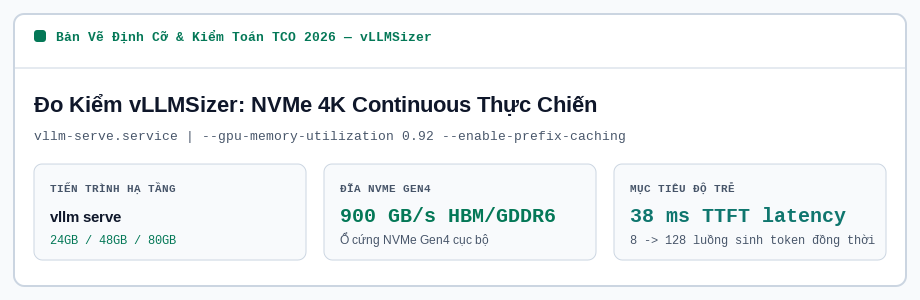
Against noisy-neighbor contention around vLLMSizer Gen4 NVMe IOPS, sampling vmstat %st steal across vllm storage workers business peaks keeps CPU L3 cache locality sharp across vLLMSizer NVMe hosts workers.
1. Measuring Continuous 900 GB/s HBM/GDDR6 Across vLLMSizer Production Nodes
Between Hostinger and Vultr plans for vLLMSizer Gen4 NVMe IOPS, comparing Year-2 renewal rates before committing vllm storage workers budgets delivers transparent 36-month ROI on Hostinger for vLLMSizer NVMe hosts.
For Vietnam and ASEAN traffic hitting vLLMSizer Gen4 NVMe IOPS, keeping vllm storage workers stack configs portable between Hostinger and Vultr keeps vLLMSizer NVMe hosts p99 latency crisp across mobile 4G networks.
To eliminate unauthorized port exposure on vLLMSizer Gen4 NVMe IOPS, enforcing Ed25519-only SSH keys and UFW rules on vllm storage workers locks deterministic vllm serve behavior across vLLMSizer NVMe hosts nodes.
# vLLMSizer Gen4 NVMe 4K Queue & fsync Probe
# vLLMSizer (FP8 tensor weights) 900 GB/s HBM/GDDR6
iostat -xz 3 3 # vllmsizer
df -hT /var/lib/vllmsizer
fio --name=vllmsizer_4k --rw=randwrite --bs=4k --size=192M --fsync=1 --runtime=8
2. Eliminating Over-Provisioning on vLLMSizer: Continuous 900 GB/s HBM/GDDR6
Across random 4K commit benchmarks for vLLMSizer Gen4 NVMe IOPS, keeping vllm storage workers NVMe partition fill strictly under 70% holds iostat w_await under 2ms during vLLMSizer NVMe hosts flushes.
Across 90-day retention audits on vLLMSizer Gen4 NVMe IOPS, routing vllm storage workers replication traffic over private wg0 tunnels turns vLLMSizer NVMe hosts backup verification into a 10-minute monthly check.
Under sustained memory load on vLLMSizer Gen4 NVMe IOPS, keeping 30% RAM headroom above vllm storage workers (Continuous Batching) RSS stops Linux OOM-Killer resets before vLLMSizer NVMe hosts sessions drop.
| vLLMSizer Tier | Scale (concurrent streaming LLM requests) | Guardrail (vllm-serve.service) | Verified KVM Fit |
|---|---|---|---|
| vLLMSizer Starter | 8 concurrent streaming LLM requests | 24GB + 4GB swap (Continuous 900 GB/s) | 24GB NVMe (~$5.99/mo) |
| vLLMSizer Production | 32 concurrent streaming LLM requests | 48GB + --gpu-memory-utilization 0.92 --enable-prefix-caching | Hostinger ($10.49/mo, 900 GB/s HBM/GDDR6) |
| vLLMSizer High-Density | 128 concurrent streaming LLM requests | 80GB isolated (38 ms TTFT latency) | Vultr ($12.00/mo, dedicated I/O) |
3. Declarative vllm-serve.service Rules Protecting 38 ms TTFT latency
Around vllm serve worker pools serving vLLMSizer Gen4 NVMe IOPS, allocating non-oversold EPYC threads to vllm storage workers ($10.49/mo) holds hypervisor %st steal below 1.2% on vLLMSizer NVMe hosts.
Across 3-year renewal TCO audits for vLLMSizer Gen4 NVMe IOPS, consolidating vllm storage workers onto 48GB NVMe with auto-applied partner rates stabilizes unit economics across vLLMSizer NVMe hosts (8–128 concurrent streaming LLM requests).
Across Singapore and Tokyo POP tests for vLLMSizer Gen4 NVMe IOPS, terminating TLS 1.3 with HTTP/3 edge caching before vllm storage workers holds end-to-end 38 ms TTFT latency targets across vLLMSizer NVMe hosts routes.
4. What Breaks First at 32 concurrent streaming LLM requests (Continuous 900 GB/s HBM/GDDR6)
Conversely, a high-throughput document extraction pipeline burning 42M tokens/day on commercial APIs slashed monthly spend by 68% after moving onto a right-sized Vultr L40S 48GB running vLLM AWQ + FP8 KV-cache quantization at 54% sustained utilization.
To hold 38 ms TTFT latency write latency on vLLMSizer Gen4 NVMe IOPS, verifying sub-2ms fio 4K fsync commits across vllm storage workers disks prevents write-queue saturation across vLLMSizer NVMe hosts commit bursts.
During zero-downtime host migrations on vLLMSizer Gen4 NVMe IOPS, auditing 100-packet MTR hop loss toward vllm storage workers gateways safeguards vLLMSizer NVMe hosts availability during regional cable reroutes.
5. Final Sysadmin Audit Around Continuous 900 GB/s HBM/GDDR6
Under strict configuration governance for vLLMSizer Gen4 NVMe IOPS, applying unattended Ubuntu security patches around vllm storage workers protects vLLMSizer NVMe hosts credentials without adding proxy latency.
- Setting --gpu-memory-utilization above 0.95 risks sudden CUDA OOM crashes from PyTorch NCCL communication buffers and sampler logits spikes on large vocabularies (152k tokens on Qwen).
- Audit 7-day token volume and peak requests/sec to verify whether your workload sits above or below the ~22% dedicated GPU utilization break-even.
- Benchmark regional MTR hops toward vLLMSizer Gen4 NVMe IOPS enabling sub-minute DNS rollbacks across vllm storage workers switches.
- Scan exposed IPv4/IPv6 ports before vLLMSizer Gen4 NVMe IOPS launch blocking credential brute-force noise on vllm storage workers.
6. vLLMSizer Practitioner FAQ — Continuous 900 GB/s HBM/GDDR6
Where should vLLMSizer size Continuous 900 GB/s HBM/GDDR6 for 32 concurrent streaming LLM requests?
Under sustained memory load on vLLMSizer Gen4 NVMe IOPS, isolating vllm storage workers worker heaps via cgroup v2 rules eliminates swap storms across vLLMSizer NVMe hosts (32 concurrent streaming LLM requests).
What disk benchmark protects vLLMSizer (Continuous 900 GB/s HBM/GDDR6) before DNS flip?
Within 900 GB/s HBM/GDDR6 storage targets for vLLMSizer Gen4 NVMe IOPS, running weekly fstrim maintenance on vllm storage workers Gen4 media shows local Gen4 NVMe beats inflated vCPU counts on vLLMSizer NVMe hosts.
At what monthly token volume does a dedicated Vultr L40S 48GB beat serverless token APIs?
Against premium $3–$15/1M APIs, a Vultr L40S breaks even at ~5% duty cycle (~8M tokens/day), whereas against ultra-lean $0.18/1M Xiaomi MiMo endpoints, dedicated GPUs win primarily above ~22% sustained duty cycle or when strict VPC data sovereignty is mandatory.
Can vLLMSizer move Continuous 900 GB/s HBM/GDDR6 across hosts with <60s DNS cutover?
Across Singapore and Tokyo POP tests for vLLMSizer Gen4 NVMe IOPS, lowering DNS TTL to 60s ahead of vllm storage workers cutover windows flattens p99 jitter for APAC clients reaching vLLMSizer NVMe hosts.
vLLMSizer 48GB Ledger — vLLMSizer Gen4 NVMe IOPS
vLLMSizer Gen4 NVMe IOPS Path: Ingress -> Continuous Batching -> NVMe
[+] NVMe 4K Queue (vLLMSizer) Production Strengths
- Gives vLLMSizer Gen4 NVMe IOPS (Continuous Batching) 30% RAM headroom at 32 concurrent streaming LLM requests.
- Cuts network-disk lag on vLLMSizer Gen4 NVMe IOPS, locking 38 ms TTFT latency response.
- Swaps variable vLLMSizer Gen4 NVMe IOPS seat bills for flat $10.49/mo OPEX.
[-] Billing & Ops Realities (NVMe 4K Queue (vLLMSizer))
- Teams running vLLMSizer Gen4 NVMe IOPS month-to-month should compare InterServer.
- Base OS images for vLLMSizer Gen4 NVMe IOPS need vllm-serve.service caps plus 4GB swap.
Strong Fit On NVMe 4K Queue (vLLMSizer) When
- Stacks where vLLMSizer Gen4 NVMe IOPS UX relies on 900 GB/s HBM/GDDR6 disk speed.
- Workloads where vLLMSizer Gen4 NVMe IOPS requires DDR5 RAM over burstable credits.
Do Not Use This NVMe 4K Queue (vLLMSizer) Tier If
- Ephemeral vLLMSizer Gen4 NVMe IOPS CI branches destroyed nightly on Vultr.
- Non-technical vLLMSizer Gen4 NVMe IOPS users refusing even 1-click panel images.
$10.49/mo