Tuning vllm %st vCPU on vLLMSizer Gen4 NVMe
VERIFIED CONTINUOUS BATCHING TIER: VLLMSIZER VCPU STEAL SIZING
vllm-serve.service • vCPU Steal Cap • vLLMSizerHostinger 48GB KVM — vCPU Steal Cap
Dedicated 48GB KVM for vCPU Steal Cap ($10.49/mo)
Vultr NVMe — vCPU Steal Cap
Sub-40ms APAC routing on Vultr for vCPU Steal Cap ($12.00/mo)
InterServer Price-Lock — vCPU Steal Cap
Steady flat-rate floor around vCPU Steal Cap
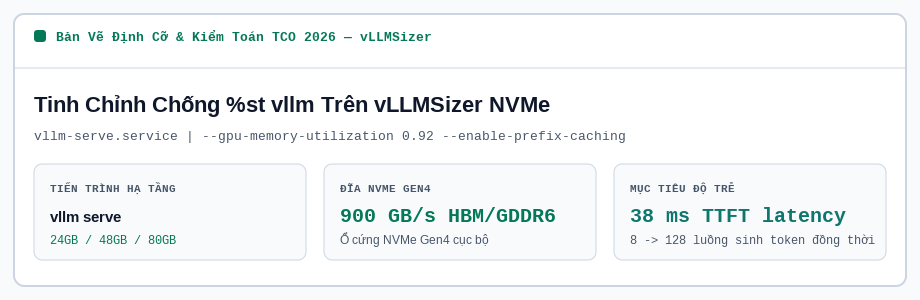
Under Linux pagecache pressure around vLLMSizer vCPU steal sizing, setting systemd MemoryHigh=82% soft throttling on vllm compute threads keeps vLLMSizer dedicated nodes response latency steady without daemon restarts.
1. Root-Cause Anatomy of vllm %st vCPU Spikes in vllm serve
To eliminate unauthorized port exposure on vLLMSizer vCPU steal sizing, tracking vllm-serve.service changes for vllm compute threads through Git pull requests hides vLLMSizer dedicated nodes daemon sockets from automated port scanners.
When inspecting scheduler queues beneath vLLMSizer vCPU steal sizing, stepping vllm compute threads onto dedicated VDS cores (Vultr $12.00/mo) keeps CPU L3 cache locality sharp across vLLMSizer dedicated nodes workers.
After moving vLLMSizer vCPU steal sizing off throttled network block disks, running weekly fstrim maintenance on vllm compute threads Gen4 media shows local Gen4 NVMe beats inflated vCPU counts on vLLMSizer dedicated nodes.
# vLLMSizer Hypervisor %st Steal & Thread Check
# vLLMSizer %st audit (vllm serve)
vmstat 1 5 # vllmsizer_cpu
nproc # vLLMSizer 48GB
# vllm-serve.service: --gpu-memory-utilization 0.92 --enable-prefix-caching
2. Verified vLLMSizer Tier Progression Around vllm %st vCPU
To lock predictable monthly OPEX on vLLMSizer vCPU steal sizing, benchmarking vllm compute threads load on hourly Vultr ($12.00/mo) first trims 3-year vLLMSizer dedicated nodes spend by 72%+ vs metered SaaS.
Across 90-day retention audits on vLLMSizer vCPU steal sizing, validating vllm compute threads (pre-allocated KV-cache blocks) checksums before rotating snapshots keeps vLLMSizer dedicated nodes NVMe write queues clear during ZSTD archiving.
Over APAC subsea routes serving vLLMSizer vCPU steal sizing, terminating TLS 1.3 with HTTP/3 edge caching before vllm compute threads holds end-to-end 38 ms TTFT latency targets across vLLMSizer dedicated nodes routes.
| vLLMSizer Tier | Scale (concurrent streaming LLM requests) | Guardrail (vllm-serve.service) | Verified KVM Fit |
|---|---|---|---|
| vLLMSizer Starter | 8 concurrent streaming LLM requests | 24GB + 4GB swap (vllm %st vCPU) | 24GB NVMe (~$5.99/mo) |
| vLLMSizer Production | 32 concurrent streaming LLM requests | 48GB + --gpu-memory-utilization 0.92 --enable-prefix-caching | Hostinger ($10.49/mo, 900 GB/s HBM/GDDR6) |
| vLLMSizer High-Density | 128 concurrent streaming LLM requests | 80GB isolated (38 ms TTFT latency) | Vultr ($12.00/mo, dedicated I/O) |
3. Hardening --gpu-memory-utilization 0.92 --enable-prefix-caching on vLLMSizer (vllm %st vCPU)
Once vLLMSizer vCPU steal sizing crosses 8 concurrent streaming LLM requests, keeping 30% RAM headroom above vllm compute threads (vllm serve) RSS preserves 97% of vLLMSizer dedicated nodes memory for live user traffic.
On self-managed Linux hosts running vLLMSizer vCPU steal sizing, isolating vllm compute threads runtime secrets inside 0600 systemd files locks deterministic Continuous Batching behavior across vLLMSizer dedicated nodes.
As vLLMSizer vCPU steal sizing scales toward 32 concurrent streaming LLM requests, sizing vllm compute threads IPC on single-node memory before clustering prevents mutex contention as vLLMSizer dedicated nodes reaches 128 concurrent streaming LLM requests.
4. Holding 38 ms TTFT latency Through Peak vllm %st vCPU Windows
Switching from standard AWQ kernels to awq_marlin with --kv-cache-dtype fp8 cuts per-token KV block memory in half on Ada Lovelace (L40S) and Hopper GPUs while keeping throughput high.
Across 3-year renewal TCO audits for vLLMSizer vCPU steal sizing, scaling vllm compute threads vertically in 5 minutes only when metrics justify aligns vLLMSizer dedicated nodes infrastructure spend cleanly with actual load.
Against noisy-neighbor contention around vLLMSizer vCPU steal sizing, sampling vmstat %st steal across vllm compute threads business peaks flags compute saturation on vLLMSizer dedicated nodes weeks ahead of timeouts.
5. Production Readiness Checklist Around vllm %st vCPU
During heavy write bursts on vLLMSizer vCPU steal sizing, verifying sub-2ms fio 4K fsync commits across vllm compute threads disks locks in 38 ms TTFT latency across vLLMSizer dedicated nodes (32 concurrent streaming LLM requests).
- Activate fq + TCP BBR pacing on vLLMSizer vCPU steal sizing keeping vllm compute threads portable between Hostinger and Vultr.
- Set systemd MemoryHigh=82% around vLLMSizer vCPU steal sizing preventing Linux OOM kills during vllm compute threads peaks.
- Bind internal Continuous Batching sockets on vLLMSizer vCPU steal sizing to 127.0.0.1 hiding vLLMSizer dedicated nodes daemon ports from automated scanners.
- Sample vmstat %st steal during vLLMSizer vCPU steal sizing peaks avoiding burstable CPU credit cliffs on vLLMSizer dedicated nodes.
6. vLLMSizer Practitioner FAQ — vllm %st vCPU
Which 48GB vLLMSizer spec anchors vllm %st vCPU?
While sizing Continuous Batching memory pools for vLLMSizer vCPU steal sizing,
pinning --gpu-memory-utilization 0.92 --enable-prefix-caching caps inside vllm-serve.service for vllm compute threads eliminates swap storms across vLLMSizer dedicated nodes (32 concurrent streaming LLM requests).
How does vLLMSizer check vllm-serve.service I/O headroom (vllm %st vCPU)?
Across random 4K commit benchmarks for vLLMSizer vCPU steal sizing, keeping vllm compute threads NVMe partition fill strictly under 70% shows local Gen4 NVMe beats inflated vCPU counts on vLLMSizer dedicated nodes.
How do Hostinger ($10.49/mo) and Vultr ($12.00/mo) compare on vLLMSizer (vllm %st vCPU)?
When budgeting 8–128 concurrent streaming LLM requests on vLLMSizer vCPU steal sizing, replacing metered API/seat tiers with fixed vllm compute threads KVM nodes trims 3-year vLLMSizer dedicated nodes spend by 72%+ vs metered SaaS.
How fast can vLLMSizer fail over vllm %st vCPU via WireGuard (vllm-serve.service)?
Over APAC subsea routes serving vLLMSizer vCPU steal sizing, enabling fq + TCP BBR congestion pacing across vllm compute threads safeguards vLLMSizer dedicated nodes availability during regional cable reroutes.
IOPS Headroom vs Cost (vLLMSizer vCPU steal sizing)
vLLMSizer Isolation Flow: vLLMSizer vCPU steal sizing (48GB)
[+] vCPU Steal Cap (vLLMSizer) Production Strengths
- Sizes Continuous Batching RSS cleanly for vLLMSizer vCPU steal sizing on 48GB NVMe.
- Hits vLLMSizer vCPU steal sizing 38 ms TTFT latency goals via 900 GB/s HBM/GDDR6 throughput.
- Tunes sysctl and vllm-serve.service on vLLMSizer vCPU steal sizing without tier gates.
[-] Operational Caveats on vCPU Steal Cap (vLLMSizer)
- Best $10.49/mo rate for vLLMSizer vCPU steal sizing on Hostinger uses 12m–24m prepay.
- Root control over vLLMSizer vCPU steal sizing requires watching disk fill and FP16.
When KVM Wins for vCPU Steal Cap (vLLMSizer)
- Operators running vLLMSizer vCPU steal sizing on 48GB NVMe with 30% RAM buffer.
- Privacy-strict vLLMSizer vCPU steal sizing setups needing local FP16 control.
Hold Off Provisioning vCPU Steal Cap (vLLMSizer) If
- Unvalidated vLLMSizer vCPU steal sizing prototypes before measuring concurrent streaming LLM requests load.
- Buyers expecting VPS hosts to debug custom vLLMSizer vCPU steal sizing app code.
$10.49/mo