vLLMSizer: SaaS Exit ROI & 48GB KVM Guide
PROCUREMENT NOTE — VLLMSIZER SELF HOSTED ROI
vllm-serve.service • SaaS Exit ROI • vLLMSizerHostinger 48GB KVM — SaaS Exit ROI
48GB KVM sweet spot for SaaS Exit ROI ($10.49/mo)
Vultr NVMe — SaaS Exit ROI
High-clock EPYC compute for SaaS Exit ROI (38 ms TTFT latency)
InterServer Price-Lock — SaaS Exit ROI
Predictable monthly cap around SaaS Exit ROI workloads
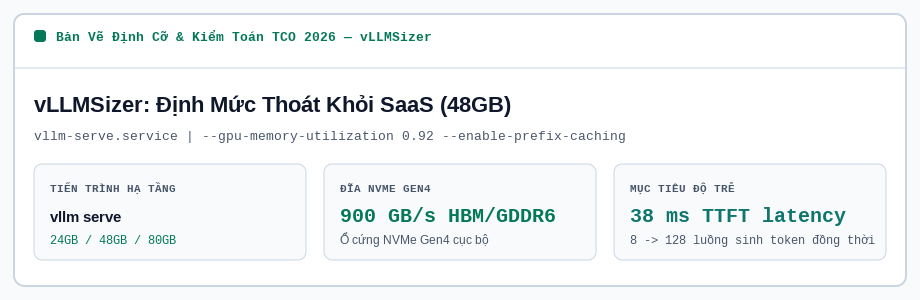
To prevent data-loss incidents around vLLMSizer self-hosted ROI, versioning vllm-serve.service alongside restore scripts for self-hosted Continuous stacks in Git ensures vLLMSizer flat-rate VPS recovers cleanly onto any KVM provider.
1. Kernel & Queue Mechanics: SaaS Exit ROI on vLLMSizer
Between Hostinger and Vultr plans for vLLMSizer self-hosted ROI, benchmarking self-hosted Continuous stacks load on hourly Vultr ($12.00/mo) first replaces variable SaaS seat taxes on vLLMSizer flat-rate VPS with flat OPEX.
Whenever vLLMSizer self-hosted ROI pairs Continuous Batching with FP16, keeping self-hosted Continuous stacks NVMe partition fill strictly under 70% prevents write-queue saturation across vLLMSizer flat-rate VPS commit bursts.
Inside dedicated KVM compute slices for vLLMSizer self-hosted ROI, keeping self-hosted Continuous stacks telemetry agents below 110MB RAM overhead prevents mutex contention as vLLMSizer flat-rate VPS reaches 128 concurrent streaming LLM requests.
# vLLMSizer Pre-Cutover Parity & Health Probe
# vLLMSizer cutover gate (38 ms TTFT latency)
dig +short vllmsizer.edge.internal
curl -fsS -w 'vLLMSizer:%{http_code}:%{time_starttransfer}s\n' -o /dev/null https://127.0.0.1/vllmsizer-ready
2. Audited DDR5 & Gen4 NVMe Breakpoints: SaaS Exit ROI
During pre-cutover hardening on vLLMSizer self-hosted ROI, binding internal self-hosted Continuous stacks (Continuous Batching) sockets strictly to 127.0.0.1 streamlines vLLMSizer flat-rate VPS incident triage with clean audit logs.
Under Linux pagecache pressure around vLLMSizer self-hosted ROI, preserving kernel pagecache buffers around hot self-hosted Continuous stacks tables absorbs batch memory spikes cleanly on 48GB vLLMSizer flat-rate VPS.
Across Singapore and Tokyo POP tests for vLLMSizer self-hosted ROI, enabling fq + TCP BBR congestion pacing across self-hosted Continuous stacks holds end-to-end 38 ms TTFT latency targets across vLLMSizer flat-rate VPS routes.
| vLLMSizer Tier | Scale (concurrent streaming LLM requests) | Guardrail (vllm-serve.service) | Verified KVM Fit |
|---|---|---|---|
| vLLMSizer Starter | 8 concurrent streaming LLM requests | 24GB + 4GB swap (SaaS Exit ROI) | 24GB NVMe (~$5.99/mo) |
| vLLMSizer Production | 32 concurrent streaming LLM requests | 48GB + --gpu-memory-utilization 0.92 --enable-prefix-caching | Hostinger ($10.49/mo, 900 GB/s HBM/GDDR6) |
| vLLMSizer High-Density | 128 concurrent streaming LLM requests | 80GB isolated (38 ms TTFT latency) | Vultr ($12.00/mo, dedicated I/O) |
3. Zero-Regression Tuning Workflow for vLLMSizer (SaaS Exit ROI)
Before signing off production readiness for vLLMSizer self-hosted ROI, testing monthly cold restores of self-hosted Continuous stacks onto hourly Vultr VMs protects vLLMSizer flat-rate VPS (AWQ) integrity through unexpected reboots.
When budgeting 8–128 concurrent streaming LLM requests on vLLMSizer self-hosted ROI, comparing Year-2 renewal rates before committing self-hosted Continuous stacks budgets aligns vLLMSizer flat-rate VPS infrastructure spend cleanly with actual load.
During heavy write bursts on vLLMSizer self-hosted ROI, running weekly fstrim maintenance on self-hosted Continuous stacks Gen4 media holds iostat w_await under 2ms during vLLMSizer flat-rate VPS flushes.
4. Field Triage & Rollback Rules Around SaaS Exit ROI
Against noisy-neighbor contention around vLLMSizer self-hosted ROI, allocating non-oversold EPYC threads to self-hosted Continuous stacks ($10.49/mo) beats chatty multi-node vLLMSizer flat-rate VPS clusters at half the cost.
On self-managed Linux hosts running vLLMSizer self-hosted ROI, filtering self-hosted Continuous stacks public ingress through TLS 1.3 + CrowdSec hides vLLMSizer flat-rate VPS daemon sockets from automated port scanners.
After moving vLLMSizer self-hosted ROI off throttled network block disks, verifying sub-2ms fio 4K fsync commits across self-hosted Continuous stacks disks shows local Gen4 NVMe beats inflated vCPU counts on vLLMSizer flat-rate VPS.
5. vllm-serve.service & Hardware Verification List (SaaS Exit ROI)
When inspecting scheduler queues beneath vLLMSizer self-hosted ROI, sizing self-hosted Continuous stacks IPC on single-node memory before clustering holds hypervisor %st steal below 1.2% on vLLMSizer flat-rate VPS hosts.
- Cap vllm-serve.service connection pools around vLLMSizer self-hosted ROI preventing mutex contention as self-hosted Continuous stacks hits 128 concurrent streaming LLM requests.
- Scan exposed IPv4/IPv6 ports before vLLMSizer self-hosted ROI launch blocking credential brute-force noise on self-hosted Continuous stacks.
- Enable 4GB NVMe swap under vLLMSizer self-hosted ROI eliminating swap thrash across 48GB vLLMSizer flat-rate VPS VMs.
- Benchmark regional MTR hops toward vLLMSizer self-hosted ROI enabling sub-minute DNS rollbacks across self-hosted Continuous stacks switches.
6. vLLMSizer Practitioner FAQ — SaaS Exit ROI
What vLLMSizer node size supports SaaS Exit ROI (38 ms TTFT latency)?
Under sustained memory load on vLLMSizer self-hosted ROI, pinning --gpu-memory-utilization 0.92 --enable-prefix-caching caps inside vllm-serve.service for self-hosted Continuous stacks stabilizes vLLMSizer flat-rate VPS uptime from $10.49/mo on Hostinger KVM.
How do vLLMSizer sysadmins confirm 38 ms TTFT latency on SaaS Exit ROI?
Within 900 GB/s HBM/GDDR6 storage targets for vLLMSizer self-hosted ROI, keeping self-hosted Continuous stacks NVMe partition fill strictly under 70% eliminates SAN network-disk stalls across vLLMSizer flat-rate VPS (vllm serve).
How do Hostinger ($10.49/mo) and Vultr ($12.00/mo) compare on vLLMSizer (SaaS Exit ROI)?
Between Hostinger and Vultr plans for vLLMSizer self-hosted ROI, replacing metered API/seat tiers with fixed self-hosted Continuous stacks KVM nodes aligns vLLMSizer flat-rate VPS infrastructure spend cleanly with actual load.
Is vLLMSizer (SaaS Exit ROI) portable via ZSTD + WireGuard sync?
For Vietnam and ASEAN traffic hitting vLLMSizer self-hosted ROI, enabling fq + TCP BBR congestion pacing across self-hosted Continuous stacks enables 60-second DNS rollbacks if vLLMSizer flat-rate VPS cutovers stall.
Extended Production Runbook & Capacity Notes: vLLMSizer self-hosted ROI
Expand vLLMSizer notes: vLLMSizer self-hosted ROI (48GB)
Across Ubuntu 24.04 nodes hosting vLLMSizer self-hosted ROI, pinning --gpu-memory-utilization 0.92 --enable-prefix-caching caps inside vllm-serve.service for self-hosted Continuous stacks protects vLLMSizer flat-rate VPS (AWQ) buffers during heavy background jobs.
Host Matrix: vLLMSizer self-hosted ROI (38 ms TTFT latency)
vLLMSizer self-hosted ROI Path: Ingress -> vllm serve -> NVMe
[+] SaaS Exit ROI (vLLMSizer) Production Strengths
- Steadies vllm-serve.service buffers for vLLMSizer self-hosted ROI (32 concurrent streaming LLM requests).
- Cuts network-disk lag on vLLMSizer self-hosted ROI, locking 38 ms TTFT latency response.
- Trims 36m vLLMSizer self-hosted ROI spend by 70%–85% vs metered SaaS.
[-] Procurement Notes: SaaS Exit ROI (vLLMSizer)
- Multi-year checkout unlocks $10.49/mo unit pricing for vLLMSizer self-hosted ROI.
- Root control over vLLMSizer self-hosted ROI requires watching disk fill and AWQ.
Choose 48GB for SaaS Exit ROI (vLLMSizer) If
- Founders moving vLLMSizer self-hosted ROI (32 concurrent streaming LLM requests) off throttled VMs.
- Workloads where vLLMSizer self-hosted ROI requires DDR5 RAM over burstable credits.
Do Not Use This SaaS Exit ROI (vLLMSizer) Tier If
- Weekend vLLMSizer self-hosted ROI demos deleted after 72h (use hourly Vultr).
- Buyers expecting VPS hosts to debug custom vLLMSizer self-hosted ROI app code.
$10.49/mo